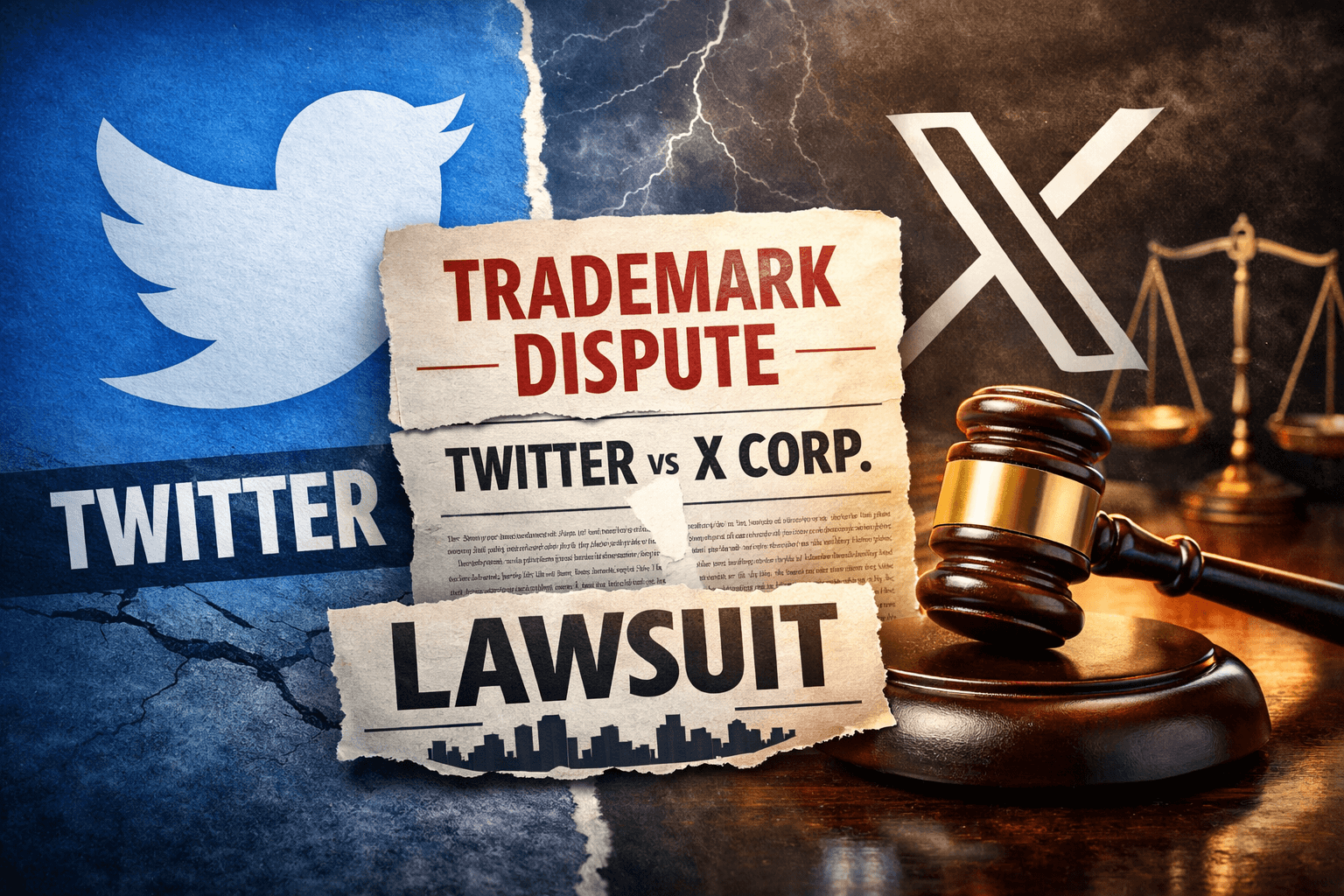
A New Legal Battle Over the Twitter Name Is Emerging
A high-profile trademark dispute is unfolding that could reshape the future of one of the most recognizable brands in internet history.
Steve Coates, a former in-house trademark attorney for Twitter, has filed new trademark applications for the names “Twitter” and “Tweet”, while simultaneously initiating legal proceedings to cancel X Corp.’s existing trademark registrations for those same marks.
The filings were submitted in early December and signal a coordinated legal strategy that goes far beyond routine trademark paperwork. At its core, the dispute raises a fundamental question in U.S. trademark law:
Can a company truly abandon a global brand—and if so, can someone else legally take it?
The Company Behind the Trademark Challenge
Coates is operating through a newly formed entity, Operation Bluebird Inc., which has publicly stated its intention to relaunch a social media platform under the Twitter name.
According to the company’s public messaging, the planned platform aims to restore what it describes as a “broken public square,” emphasizing transparency, trust, and community-driven dialogue. Visitors to the company’s website can already reserve usernames, a move that suggests the venture is actively preparing for a public rollout.
From a legal standpoint, this is a crucial detail: intent to use plays a significant role in trademark ownership disputes.
Why X Corp.’s Trademarks Are Being Challenged
Operation Bluebird’s legal action centers on a Petition to Cancel filed with the U.S. Patent and Trademark Office (USPTO). The argument is straightforward but bold:
X Corp. has abandoned the “Twitter” and “Tweet” trademarks and has no intention of resuming their use.
Under U.S. trademark law, a mark may be canceled if:
-
It is no longer used in commerce, and
-
The owner lacks intent to resume use in the foreseeable future
The petition argues that both conditions have been met.
Evidence Cited in the Trademark Cancellation Petition
The challenge outlines several actions taken by X Corp. that, when viewed together, may support a claim of abandonment:
-
Complete rebranding from Twitter to X
-
Removal of the Twitter name, bird logo, and related imagery from the platform
-
Replacement of all public-facing branding with X-branded assets
-
Final technical transition from Twitter.com to X.com in mid-2024
-
Absence of Twitter or Tweet branding in advertising, press releases, or official communications
While Twitter.com still redirects users to X.com, trademark law generally requires active commercial use, not mere redirects, to maintain enforceable rights.
Can the “Twitter” Trademark Really Be Reclaimed?
This case highlights a rare but critical trademark issue: what happens when a famous brand is intentionally retired?
Trademark registrations do not exist to preserve history—they exist to protect active commercial identifiers. If a company stops using a mark and demonstrates no intention to revive it, the law may treat that mark as abandoned, regardless of how famous it once was.
If the USPTO determines that X Corp. discontinued the Twitter brand without intent to resume use, cancellation of the registrations becomes a real possibility.
Such an outcome would be extraordinary—but not impossible.
The Hidden Power of Residual Goodwill
Even if X Corp. were to lose its trademark registrations, the legal battle would not necessarily end there.
X Corp. may still possess residual goodwill, a legal concept recognizing that consumers continue to associate a brand with its former owner.
Ask the average internet user who owns Twitter, and the answer will almost certainly still be X Corp.
That lingering consumer association could allow X Corp. to pursue a trademark infringement lawsuit, arguing that Operation Bluebird’s use of the Twitter name would cause confusion—even without active registrations.
However, such litigation would likely be lengthy, expensive, and public.
The Business Reality Behind the Lawsuit
This dispute may ultimately come down to a strategic business decision rather than a purely legal one.
Trademark litigation in federal court can cost millions of dollars and drag on for years. The central question is whether X Corp. is willing to invest heavily in defending a brand it publicly moved away from.
Operation Bluebird’s legal gamble appears to rest on the assumption that X Corp. may choose not to re-engage with the Twitter brand at all.
What Happens Next in the Twitter Trademark Dispute?
X Corp. is expected to file a formal response to the Petition to Cancel in the coming weeks. At that point, several paths are possible:
-
A contested USPTO cancellation proceeding
-
A negotiated settlement
-
A federal trademark infringement lawsuit
-
Or complete inaction, which could favor Operation Bluebird
Any of these outcomes would have major implications for trademark law, brand strategy, and the future of legacy tech brands.
Why This Case Matters Beyond Twitter
This dispute serves as a powerful reminder for companies across all industries:
-
Trademarks require active use
-
Brand reboots carry legal risks
-
Abandoning a famous name can invite unexpected challengers
For startups, legal professionals, and brand owners alike, this case could become a landmark example of how trademark abandonment and residual goodwill collide.
Stay Updated on Major Trademark Lawsuits
At LawsuitIt.com, we track:
-
Breaking trademark disputes
-
High-profile corporate lawsuits
-
Intellectual property battles shaping the digital economy
👉 Bookmark this page and explore our latest coverage on trademark infringement lawsuits, brand ownership disputes, and emerging legal trends.
🔎 It Takes few Seconds to leave a comment/opinion down below.



0 Comments